
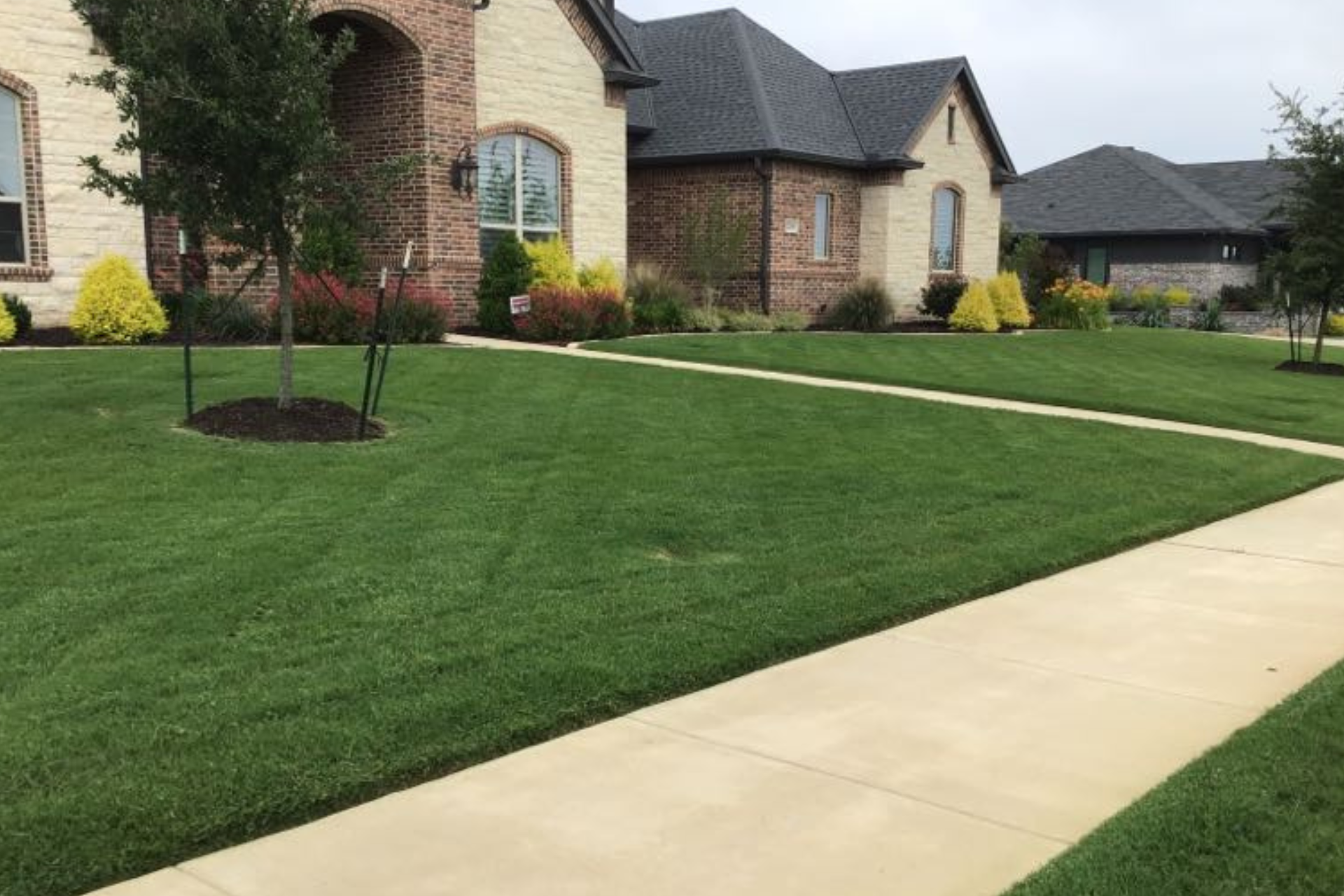
Short Answer: If your North Texas Bermuda lawn looked great in May and is suddenly losing color or thinning in June, the cause is usually one of four things. Daily shallow watering catching up with the lawn as heat sets in. Compacted clay soil starving roots of oxygen as growth ramps up. Early-season nitrogen wearing off without proper summer follow-up. Building pest pressure (chinch bugs, early grub adults) that has not yet shown visible damage. Each cause has a different fix. Getting the right diagnosis in June recovers the season. Getting the wrong diagnosis loses summer.
If you have a Bermuda lawn in Midlothian, Waxahachie, Red Oak, Cedar Hill, or anywhere in Ellis County, you have probably noticed the pattern. The lawn looks beautiful in May. By the second or third week of June, something starts to go wrong. Color fades. Patches appear. The lush spring growth thins out. By July you are looking at a struggle.
This is one of the most common issues we see across North Texas. The cause is usually identifiable and the fix is usually straightforward once you know what to look for. We want to walk through the four most common causes and how to identify which applies to your specific lawn.
Cause 1: Shallow Watering Catching Up
If you have been running daily 15-minute irrigation cycles through spring, your Bermuda roots have settled into the top inch and a half of soil. Spring weather was forgiving because temperatures kept the surface moist. June changes that. The surface dries faster and the shallow roots cannot reach the moisture below.
Diagnostic signs. Footprints staying visible after walking. Blue-gray cast to blades. Even browning across sunny areas. Recovery within 24 to 48 hours of deep watering.
Fix. Switch to twice-weekly deep cycles in early morning. Half an inch per cycle. The lawn may look stressed for 7 to 10 days as roots adjust, then recovers stronger.
Cause 2: Compacted Clay Soil
Ellis County clay soils compact under foot traffic, mower wheels, irrigation, and just settling over time. Bermuda needs to send runners into the soil to thicken. Compacted soil prevents that, so the lawn thins despite proper care.
Diagnostic. Screwdriver test. Push a long screwdriver into the lawn after watering. If it stops at 2 to 3 inches and you have to lean on it, you have compaction.
Other signs. Water runs off rather than soaking in. Repeated thin areas in the same spots year after year. Lawn feels hard underfoot.
Fix. Core aeration. June is a viable window for Bermuda because the grass is in peak growth and recovers fast.
Cause 3: Early-Season Nitrogen Wearing Off
If you applied spring fertilizer in March or April, those nutrients have been used by now. The lawn that was thriving on the spring application is now hungry but not yet getting the summer feeding it needs.
Diagnostic. Pale color across the whole lawn. Slower regrowth between mowings. Otherwise the lawn looks healthy and root systems are intact.
Fix. A moderate summer fertilizer application with slow-release nitrogen and added potassium. Apply at the lower end of the rate range. Water in within 24 hours.
Avoid heavy nitrogen, which pushes soft growth that summer heat damages.
Cause 4: Building Pest Pressure
Chinch bugs build populations through May and June and start causing damage. Adult June bugs and other beetles are flying and laying eggs in the lawn that will produce grub damage in August.
Diagnostic for chinch bugs. Yellow patches in sunny areas, soap flush test surfaces bugs.
Diagnostic for grubs. Visible adult beetles flying. Not yet visible damage because the eggs are still being laid. Preventive treatment is appropriate.
Fix. Targeted insecticide for confirmed chinch bugs. Preventive grub treatment in late June regardless of visible damage.
How to Tell Which Cause Applies
For most lawns, a 15-minute diagnostic walk identifies the primary cause. Run through this sequence.
Footprint test. Visible footprints suggest watering stress.
Screwdriver test. Stops at 2 to 3 inches suggests compaction.
Soap flush test. Surfacing bugs confirms chinch bugs.
Recovery test. Deep watering produces 24 to 48 hour improvement suggests heat stress was primary.
Fertilization history. Last application 8+ weeks ago and no other diagnosis pointing elsewhere suggests fertility timing.
Multiple Causes At Once
The most common reality is multiple compounding causes. Compaction plus shallow watering compounds. Pest pressure on stressed grass compounds. Each cause makes the others worse.
Address all of them. Aerate the compacted soil. Switch watering to deep infrequent. Apply moderate summer fertility. Schedule preventive pest treatment. The combination produces dramatically better results than addressing only the most visible issue.
The Cultural Mistakes Worth Fixing
Beyond the four causes, several cultural practices contribute to June decline.
Mowing too short. Many Ellis County homeowners cut Bermuda at 1.5 to 2 inches. The right summer height is 2.5 to 3 inches. Taller cuts shade soil, conserve moisture, encourage deeper roots.
Dull mower blade. Tears grass tips and creates entry points for disease. Sharpen at least once per season.
Bagging clippings. Removes nutrients and organic matter from the lawn. Mulch clippings to support soil health.
Evening watering. Keeps canopy wet overnight, increases disease pressure.
Heavy nitrogen late in spring. Pushes growth that summer cannot support.
The Realistic June Recovery Timeline
If you fix the identified cause in mid-June, expect this recovery pattern.
Week 1: visible decline stops. The lawn stabilizes.
Weeks 2 to 3: color starts to return. Density rebuilds.
Weeks 4 to 6: most lawns look meaningfully better. Thin spots fill in from surrounding healthy turf.
By Labor Day: properly treated lawns look noticeably better than untreated neighboring lawns.
The recovery is reliable when the right cause gets identified and addressed.
The Aeration Conversation
For Ellis County Bermuda lawns showing June decline, aeration is one of the highest-leverage interventions available. Clay soils throughout the region compact under normal use. Bermuda’s spreading habit requires soil it can penetrate. Annual or biennial aeration produces measurably better lawn density and resilience. June is a viable window because Bermuda is in peak growth. Pair aeration with a moderate summer fertilizer application 7 to 10 days later for compounded benefits.
Frequently Asked Questions
What if my lawn looks fine right now but I am worried about June stalling?
Set up the right systems now. Switch to deep infrequent watering, set mowing height to 2.5 to 3 inches, apply moderate summer fertilizer, schedule preventive grub treatment. Prevention is dramatically cheaper than recovery.
How quickly should I act if I see decline?
Within a week. Decline tends to compound. Early intervention is the difference between minor recovery and major rescue work.
Should I just water more if I see decline?
Almost never the right answer. Daily watering on a stressed lawn worsens the root system. Diagnose first.
Can my lawn recover from significant damage by Labor Day?
For light to moderate damage, yes, with correct treatment. Severe damage may need fall renovation for full recovery.
The Comparison Across June Care Approaches
For Ellis County Bermuda lawns, the difference between proper June care and neglected June care shows up dramatically by August. Properly cared for lawns: dark even color, density maintained, manageable pest pressure, water bills under control. Neglected lawns: yellow and thinning patches, scattered pest damage, irrigation runaway costs, expensive rescue work needed. The difference is roughly $200 to $500 in proactive June investment vs $1,000 to $3,000 in August rescue work plus the visual damage during the interim.
What Long-Term Customers Tell Us
For TW Lawn Care customers who have been on regular programs for 3+ years, the feedback pattern is consistent. The lawn looks better year over year as soil health improves and the program optimizes for each specific property. Total summer maintenance cost is lower than the homeowner expected. Rescue work is rarely needed because issues are caught early. The annual investment compounds across years rather than starting from scratch each spring.
Getting Started With Service
For homeowners ready to schedule professional service, the typical process. Initial property walk-through (typically free) to assess your specific lawn. Recommendation matched to your property and goals. Quote with transparent pricing. Service start within 5 to 10 days of agreement. Most customers are in routine service within a week of first contact.
What to Do Next
If your Bermuda lawn has stalled or you want help diagnosing what is happening, we are glad to walk the property. We will identify the cause, recommend the right combination of fixes, and tell you straight what is realistic for the rest of the season.
Call us at 972-757-0926 or visit twlawncareservices.com. We serve Midlothian, Waxahachie, Red Oak, Cedar Hill, and surrounding Ellis County communities.