Mowing Frequency for Bermuda Lawns Through Midlothian Summer: Why Once a Week Falls Behind
Mowing Frequency for Bermuda Lawns Through Midlothian Summer
Why Once a Week Falls Behind
TW Lawn Care • July 2026 • Midlothian, TX
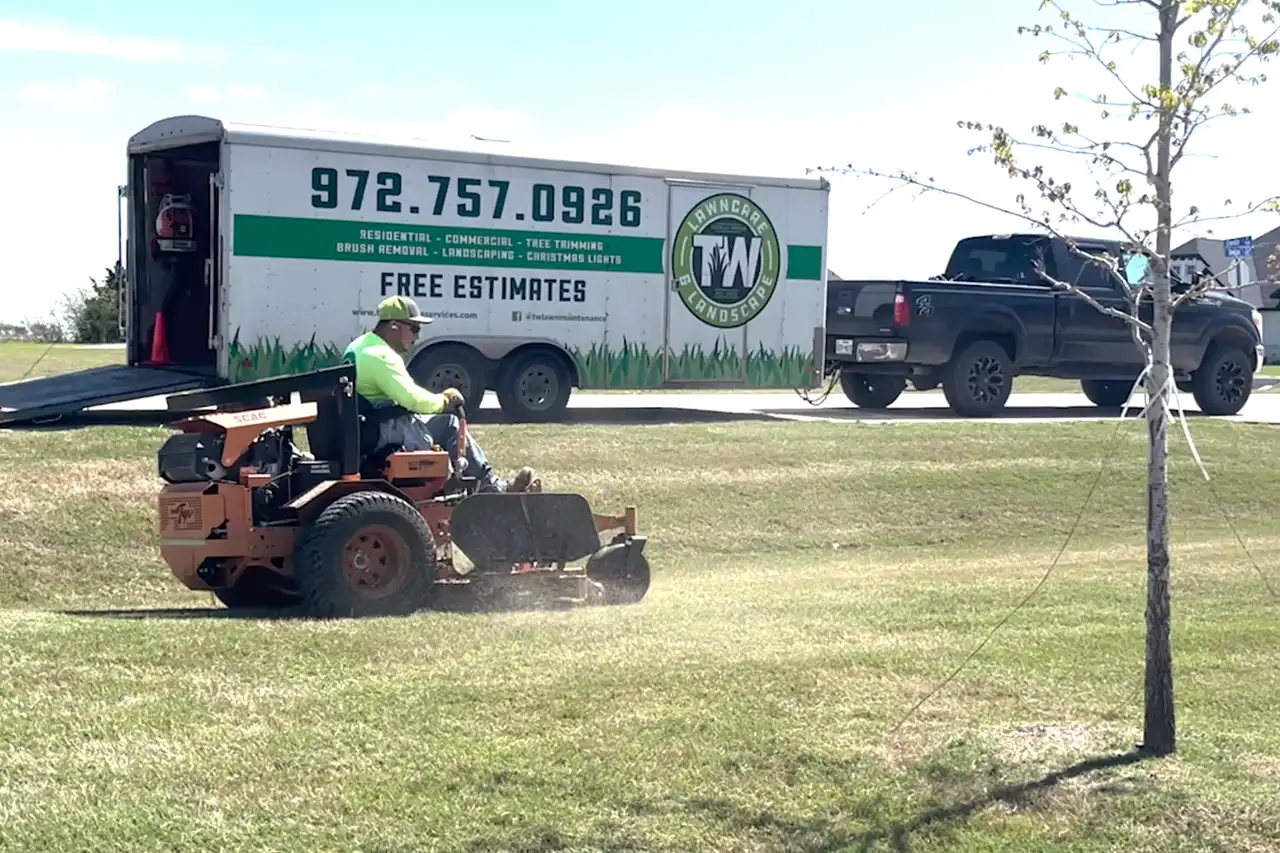
An irrigated Bermuda lawn in Ellis County grows three quarters of an inch to a full inch of vertical leaf in some seven day periods of July. The one-third rule limits a weekly mower to almost three inches of cutting height to stay healthy. The fix is mowing every five days through July and August, at a height between two and two and a half inches, with a sharp blade and mulched clippings.
The Single Most Common July Mistake
The most common mistake we see on Midlothian Bermuda lawns in July is not watering. It is not fertilizer. It is mowing. Specifically, the assumption that the once-a-week mow that worked in April and May is still the right schedule in July. The growth math has changed, the lawn has changed, and the once-a-week schedule produces a stressed, scalped, weed-prone canopy through the most demanding stretch of the year.
The Growth Math
Growth Rate
Irrigated Bermuda in Midlothian produces half an inch to a full inch of vertical leaf growth per seven-day period in July with daytime highs between 95 and 100 degrees.
The One-Third Rule
Never remove more than a third of the leaf at one cut. Mowing four inches of growth down to two inches removes half the leaf — that violates the rule and the lawn pays the price.
The Wrong Combination
Mowing short (two inches) and infrequently (once a week) produces scalp, stresses crowns, and opens the canopy to summer weeds. This is the combination we see most often.
The Right Schedule for July and August
Frequency
Every five days. This cadence aligns regrowth with the one-third rule at a normal Bermuda height and matches how professional crews operate (Monday and Friday, or Tuesday and Saturday).
Height
Two to two and a half inches for common Bermuda varieties like Tifway 419. Up to three inches for less-managed lawns or partial shade. Lower heights require more frequent mowing and a reel mower.
Clippings
Mulch them — do not bag. Mulched clippings return about 25 percent of seasonal nitrogen needs and decompose within 48 to 72 hours without smothering the lawn.
Blade
Sharpen every 25 hours of mowing — roughly monthly during summer. Dull blades tear leaves, producing brown tips that look like drought stress and create disease entry points.
What Once-a-Week Mowing Actually Costs
Scalp and Crown Stress
Every weekly cut in July violates the one-third rule, stressing the lawn and producing scalp in uneven areas across the yard.
Weed Pressure
The canopy opens between mowing events as taller blades flop over, letting summer weeds like crabgrass and goosegrass germinate in the gaps.
Clipping Clumps
The volume of clippings exceeds what a mulching deck can handle, leaving clumps that smother grass underneath — or forcing you to bag and remove organic matter.
Heat Damage
A dense Bermuda canopy drops soil surface temperature by 10 to 15 degrees. A scalped lawn loses that protection — the difference between a lawn that handles July and one that browns out in patches.
Equipment Guide
Push Mowers
Adequate for lots under a quarter acre with simple geometry. Sharpen the blade monthly. Verify the deck is level — one wheel out of adjustment scalps half the yard.
Self-Propelled Walk-Behinds
The right choice for lots between a quarter and a half acre. Look for a 21 to 22 inch deck with quality mulching. Honda, Toro, and Snapper produce reliable machines in this category.
Zero-Turn Riders
The right choice for lots above a half acre. Excellent cut quality on flat terrain. Less effective on steep slopes or tight spaces.
Reel Mowers
Capable of cutting Bermuda below an inch and a half with excellent quality, but require frequent maintenance and mowing every three or four days. Best for homeowners pursuing a tightly manicured aesthetic.
Watering and Mowing: Coordinate Both
Never Mow Wet Grass
Wet grass tears under the blade, the deck packs with wet clippings, and the mower compacts soft soil. Wait until the canopy is dry, usually by mid morning on a normal irrigation day.
Separate Mow and Water Days
Never water the same day you mow. The lawn is mildly stressed after a cut. Example: mow Monday and Friday, water Tuesday and Saturday.
Mow Before Fertilizing
Recently mowed leaves absorb foliar nutrients better, and the fertilizer is less likely to be picked up by the next mow. Always mow before applying fertilizer, not after.
Frequently Asked Questions
What if my lawn looks fine on a weekly schedule?
It probably is not growing at full speed. Weekly schedules can work for lawns with slightly lower fertility, less irrigation, or partial shade. For aggressively irrigated, fully fertilized, full-sun Bermuda, weekly does not work.
Will more frequent mowing increase water needs?
Marginally — about 5 to 10 percent more transpiration from a denser canopy. But deeper roots improve water-use efficiency. Total water cost is roughly the same.
Should I mow shorter or taller in summer?
Taller in summer for Bermuda in Ellis County. The cooling and weed-suppression benefits outweigh the slightly slower visual feedback. We recommend two and a quarter to two and a half inches for July and August.
Is bagging ever a good idea?
Yes — when treating an active disease (to remove infected leaf tissue) or after an armyworm or chinch bug outbreak (to remove eggs). Otherwise always mulch clippings.
What to Do This Weekend
Pull your mower out and check three things: blade sharpness (run your thumb across the edge; if it feels round, sharpen), deck height (adjust to two and a quarter to two and a half inches measured from flat ground), and your schedule. If you are on weekly, plan one extra cut between now and the end of July and observe the difference.
If you want us to handle mowing on a five-day schedule through July and August, or if you want a property walk to assess what your specific Bermuda variety needs, we serve Midlothian, Waxahachie, Red Oak, Cedar Hill, and surrounding Ellis County.