Why Your Midlothian Bermuda Lawn Browns in July Even With Watering: 6 Causes Beyond Drought
Why Your Midlothian Bermuda Lawn Browns in July Even With Watering
6 Causes Beyond Drought
TW Lawn Care • July 2026 • Midlothian, TX
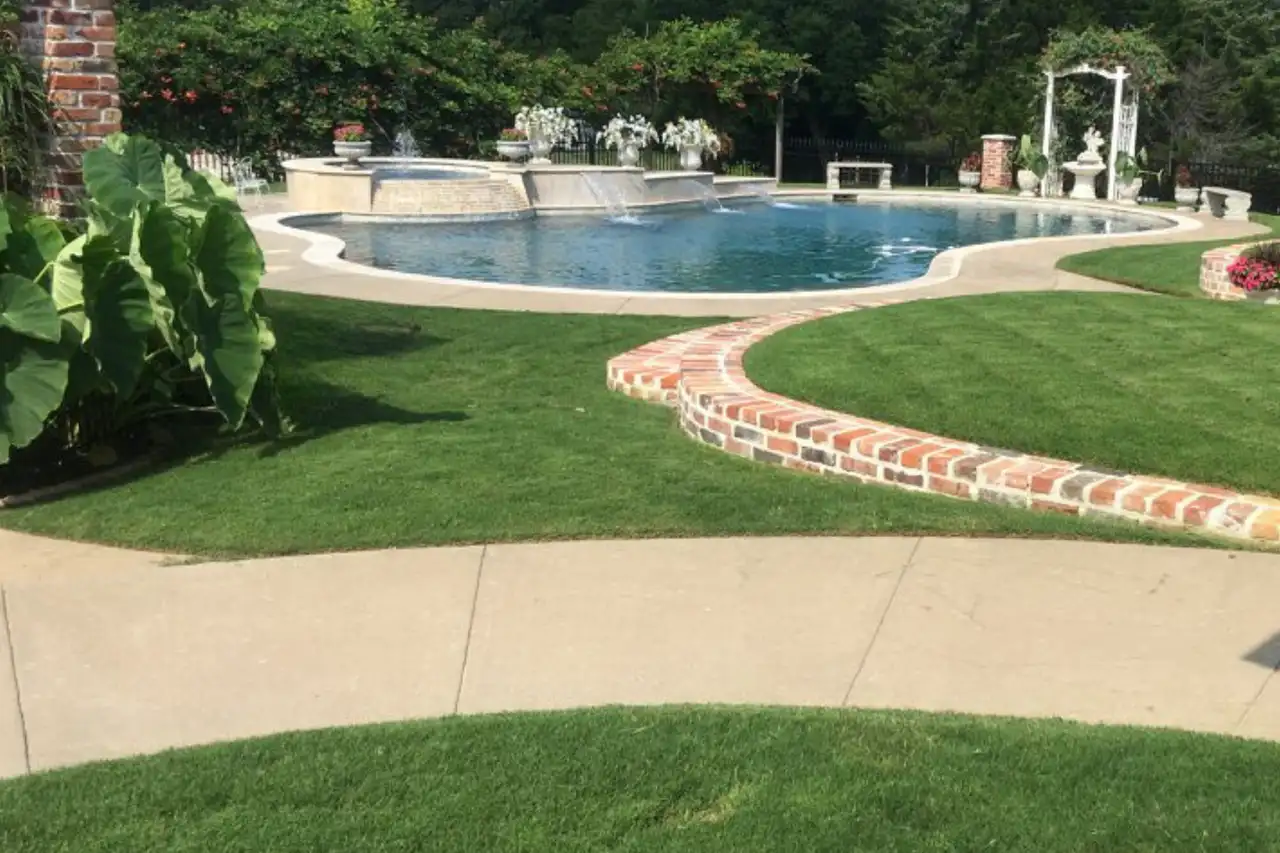
When a Midlothian Bermuda lawn browns in July and you are already watering, drought is almost never the only cause. Compaction, hydrophobic soil, chinch bug feeding, uneven irrigation coverage, mower scalp, and root-zone disease are the six causes we walk every property for in July. Treating drought when the real problem is compaction or chinch bugs makes the lawn worse, not better.
Why July Is Different
By the second week of July in Ellis County, the calls change. June calls are about weed pressure, spring fertilizer questions, and irrigation startup. July calls are about brown spots that appeared in a week, irregular patches that spread, and the question every Midlothian homeowner asks at least once a summer: I am watering, so why is my lawn dying?
The honest answer is that watering only solves drought. There are at least six other reasons a North Texas Bermuda lawn browns in July, and several of them get worse if you respond with more water. We serve Midlothian, Waxahachie, Red Oak, Cedar Hill, and the surrounding Ellis County area, and these six causes account for the majority of mid-summer Bermuda decline we see across the region.
The 6 Causes of July Bermuda Browning
1. Soil Compaction From Years of Traffic
Mower wheels following the same lines, kids and pets on the same paths, and clay-heavy Ellis County soil compress over time. The result is a soil profile where water cannot infiltrate, roots cannot expand, and air cannot reach the rhizome zone.
Field Signal: Push a screwdriver into the brown area — if it resists at two inches where a healthy zone slides in five, compaction is in play.
Fix: Core aeration in September, followed by recovery fertilization. Light topdressing with sand or sand-compost blend on worst traffic lanes in the meantime.
2. Hydrophobic Soil Repelling Water
Soil that has dried completely through repeated heat cycles can develop a waxy coating on soil particles. That coating repels water. Sprinklers run, water beads on the surface, runs to the gutter, and the root zone underneath stays bone dry.
Field Signal: Dry soil two inches down after a full irrigation cycle, plus visible beading or pooling on the surface during irrigation. Common on south-facing slopes and high spots.
Fix: A soil surfactant (wetting agent) applied as granular or liquid. Within a single irrigation cycle the soil starts absorbing water again and the lawn often greens up in seven to ten days.
3. Chinch Bug Feeding
Chinch bugs cluster along driveways, sidewalks, and south-facing foundations where the soil heats up earliest. They pierce grass blades and inject toxins that kill tissue from the crown out. Damage looks identical to drought stress at first glance.
Field Signal: Irregular brown patches starting along hardscape edges. Adults are 1/8 inch with black bodies and white X-pattern wings. A coffee can float test showing 5+ bugs confirms infestation.
Fix: Targeted insecticide application along affected zones, timed for early morning or late evening. Recovery of affected turf takes three to six weeks once population is controlled.
4. Irrigation Coverage Gaps
Heads have settled, gotten knocked sideways by mowers, clogged with mineral deposits, or been blocked by growing shrubs since installation. The map of where water actually lands today is almost never the map the installer drew on day one.
Field Signal: Brown patches that follow a geometric pattern — wedge shapes, half circles, or strips along bed edges matching the spray pattern of a missing or misaligned head.
Fix: A head-by-head audit. Run each zone, check that every head pops up fully, rotates through its arc, and overlaps adjacent heads. Replace clogged nozzles and trim blocking shrubs.
5. Mower Scalp on Stressed Crowns
A mower set at an inch and a quarter that did fine in April will scalp half the property in July. Scalp damage removes green tissue all the way to the crown, leaving tan stubble that looks like dead lawn but is actually live crowns that got skinned.
Field Signal: Brown that follows mower lines — stripes across the lawn matching your mowing pattern, or brown rings around sprinkler heads and uneven terrain.
Fix: Raise mowing height to two to two-and-a-half inches. Use a sharp blade, cut no more often than every five to seven days, and mulch clippings — never bag them.
6. Root Zone Disease
Take-all root rot, leaf spot, and Bermuda decline are the three disease patterns most common in July. Take-all is the worst because it attacks roots with no canopy symptom until the lawn collapses — the grass simply pulls out of the soil because the roots are gone.
Field Signal: For take-all, dead grass lifts without resistance with black or brown roots instead of white. Leaf spot shows dark lesions on individual blades. Bermuda decline shows yellowing then browning with blades easy to pull from the stolon.
Fix: Targeted fungicide for the diagnosed disease at first visible symptoms. Take-all often needs two applications 28 days apart plus soil pH adjustment with elemental sulfur for long-term management.
How These Causes Overlap
The hardest part of summer Bermuda diagnosis is that two or three of these causes are usually working together. A compacted clay yard with a coverage gap and a hydrophobic surface will brown out in patterns that look like all three at once.
The fastest way to sort it out is a screwdriver, a coffee can, a head-by-head walk during a zone run, and a tuft of grass pulled from the worst spot for root inspection. Ten minutes of fieldwork answers most of the question.
What We Do on a July Diagnostic Visit
Soil Moisture Probe
We test soil moisture in the brown zone and a nearby healthy zone with a probe to identify hydrophobic or compacted areas.
Sprinkler Head Audit
We check sprinkler head positioning and operation on all affected zones, verifying full pop-up, correct arc, and proper overlap.
Chinch Bug Float Test
We perform a coffee can float test on at least two locations along sun-exposed edges to confirm or rule out chinch bug infestation.
Root & Crown Inspection
We pull tufts of grass and inspect roots and crowns for disease, and measure mower scalp by checking deck height against ground variability.
The findings drive a written treatment plan with timing and cost. The cost of a wrong treatment is not just the money — it is the two to three additional weeks of damage while the real cause keeps spreading.
Frequently Asked Questions
I just watered yesterday and the lawn looks worse today. What does that mean?
Either hydrophobic soil (water did not absorb), a coverage gap (water did not reach), or chinch bugs (water does not solve insect damage). The screwdriver test answers the first two questions in 30 seconds.
Can I fertilize my way out of brown patches in July?
No. Nitrogen on a stressed lawn in 95 to 100 degree heat compounds the stress. Diagnose the cause first. Fertilize only when the lawn is actively growing and the underlying issue is corrected.
How fast can a chinch bug infestation move?
From first noticeable damage to a significant patch is often seven to ten days. From a significant patch to half the front yard can be another two weeks. The window for catching them early is very short.
If I have compaction, can I aerate in July?
We do not recommend it in Ellis County. The crowns are already stressed by heat. Schedule aeration for September when temperatures drop and Bermuda is recovering. Topdressing the worst lanes can hold you over.
Not Sure Which Cause Is Killing Your Lawn?
Do the screwdriver test, the chinch bug float, and the zone walk this week — the diagnostic costs nothing and the answer often surprises homeowners. Or have a professional walk it with you and put a written treatment plan together.
Serving Midlothian, Waxahachie, Red Oak, Cedar Hill, and the surrounding Ellis County area.